




Quick Summary
Managing IT assets effectively is critical for cost control, compliance, and sustainability. Yet many businesses still struggle with idle devices, data security risks, and mounting e-waste. Enter Boomerang Lifecycle Management—a circular approach to IT asset lifecycle management that maximises value and maximises waste. But what is it, and why should your business care? Let’s explore.
What Is Boomerang Lifecycle Management?
Boomerang Lifecycle Management is a strategic framework that manages IT assets from acquisition to end-of-life in a closed-loop system. Instead of discarding devices after use, they “boomerang” back into your ecosystem for refurbishment, redeployment, or responsible recycling.
This approach covers every stage of the IT asset lifecycle, including:
Procurement: Selecting cost-effective, sustainable devices.
Deployment: Efficient configuration and distribution.
Maintenance: Keeping devices secure and operational.
Recovery & Redeployment: Refurbishing and reusing assets internally.
End-of-Life Recycling: Ensuring compliance and eco-friendly disposal.
Cut carbon emissions and align with net-zero goals
Extend device lifespan and reduce e-waste
Improve operational efficiency and productivity
Strengthen brand reputation with eco-conscious customers
Support compliance, including ISO 27001-aligned best practices
Sustainability and performance are no longer at odds. Modern IT solutions deliver both.
Why Your Business Needs Boomerang Lifecycle Management
- Significant Cost Savings
According to Gartner, businesses that implement structured IT asset lifecycle management can reduce hardware costs by up to 30% annually through reuse and refurbishment programs.
- Sustainability and ESG Compliance
IDC reports that e-waste is projected to reach 75 million metric tons by 2030, making circular lifecycle strategies essential for reducing environmental impact.
- Enhanced Security and Compliance
Data breaches during asset disposal are a major risk. Boomerang Lifecycle Management includes secure data wiping aligned with ISO 27001 standards, ensuring compliance with regulations like GDPR.
- Operational Efficiency
Automated asset tracking and lifecycle planning reduce downtime and improve resource allocation, freeing IT teams to focus on strategic initiatives.
Key Benefits:
Energy-efficient devices outperform older models while consuming less power
Cloud-optimized environments reduce hardware strain and boost resilience
Circular IT practices (repair, reuse, redeploy) maintain productivity and shrink your carbon footprint
Sustainability enhances performance when done right.
How Does Boomerang Lifecycle Management Work?
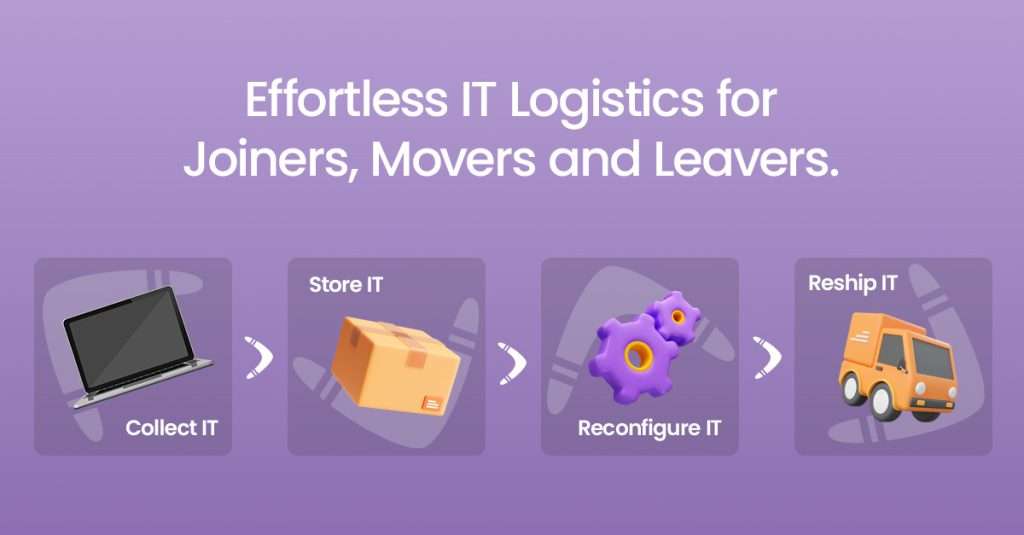
Think of it as a circular loop rather than a straight line:
Asset Tracking: Advanced tools monitor devices throughout their lifecycle.
Refurbishment Programs: Devices are repaired and upgraded for reuse.
Secure Data Erasure: Certified processes ensure compliance.
Vendor Partnerships: Collaborations for recycling and buy-back options.
This model ensures every device is accounted for, reused where possible, and disposed of responsibly when necessary.
The IT Asset Lifecycle Explained
The IT asset lifecycle typically includes five stages:
Planning & Procurement: Businesses assess needs and acquire devices strategically.
Deployment: Devices are configured and distributed to employees.
Maintenance & Support: Regular updates and repairs keep assets functional.
Recovery & Redeployment: Devices are refurbished and reassigned internally.
End-of-Life Disposal: Secure data wiping and eco-friendly recycling complete the cycle.
Boomerang Lifecycle Management optimizes each stage, ensuring maximum value extraction and minimal waste.

Benefits for IT Teams
Reduced Workload: Automation simplifies asset tracking.
Predictable Costs: Lifecycle-based budgeting prevents surprises.
Sustainability Reporting: Easy compliance with ESG requirements.
Future Trends in Lifecycle Management
With increasing focus on green IT and circular economy principles, Boomerang Lifecycle Management is set to become the standard. Businesses that adopt it early will gain a competitive edge in cost efficiency and sustainability.
Ready to Implement Boomerang Lifecycle Management?
If your business wants to cut costs, improve sustainability, and stay compliant, adopting this model is a smart move.
👉 Learn More About Boomerang
👉 Explore Devices for Teams

Andrew Morgan is Co-Founder of HardSoft Computers, where he’s spent over 30 years driving innovation in tech leasing. With a focus on making IT solutions flexible and accessible, Andrew leads strategy across product development, SEO, and digital marketing.
He’s passionate about helping businesses thrive with the right technology and regularly shares insights on the HardSoft blog.
LinkedIn: Andrew Morgan
Email: [email protected]